Driving Growth Through Smarter Fleet Decisions: How Go Express Travel Aligns Equipment with Its Operation
- June 18, 2026
- Blog
- Posted by Kiran Kaur
- Comments Off on Driving Growth Through Smarter Fleet Decisions: How Go Express Travel Aligns Equipment with Its Operation
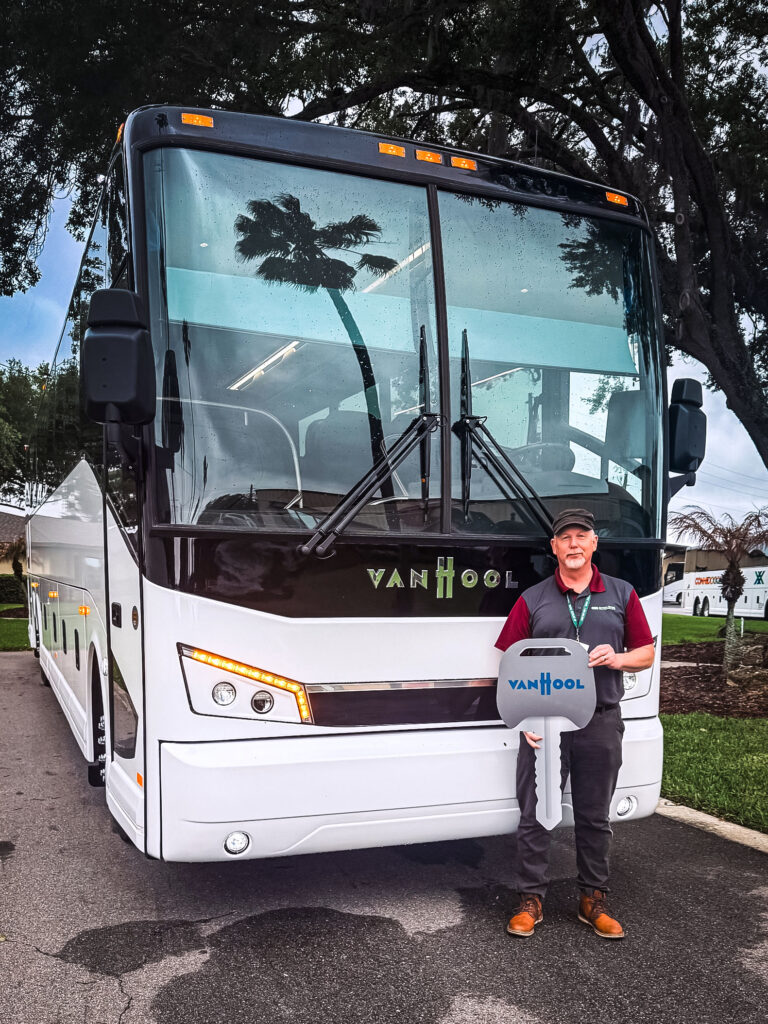
For operators evaluating a motorcoach for sale, the decision goes well beyond specifications. It comes down to how well that vehicle supports day-to-day operations and long-term business needs.
For GO Express Travel, that perspective has been shaped over decades of steady evolution. Founded in 1993, the company began with a focused airport shuttle service and has grown into a diversified transportation provider supporting a wide range of services across Indiana and beyond. Today, its operation includes approximately 70 vehicles serving airport shuttle routes, charter work, corporate transportation, and private services.
“Our operation has evolved quite a bit over the years,” said Martin Bentley, Business Development Director of GO Express Travel. “And as that’s happened, the way we think about equipment has had to evolve with it.”
That evolution is what drives how GO Express approaches fleet decisions today.
From Shuttle Service to a Diversified Operation

What started as a simple shuttle service has grown into a multi-service operation with distinct transportation needs.
Some services require consistency and repeatability, while others demand flexibility and a higher level of passenger experience. Managing both introduces complexity and requires a more intentional approach to fleet planning.
This shift is not unique. According to the American Bus Association, motorcoaches remain a key part of group transportation, where reliability and efficiency are critical.
For GO Express, growth has meant aligning the fleet with those different service demands rather than applying a single approach across the board. Each service type brings its own expectations, whether that is route consistency or passenger comfort.
Matching Equipment to the Operation
One of the ways GO Express has approached this challenge is by maintaining a mixed fleet. The company operates a wide range of vehicles, including sedans, SUVs, vans, minibuses, and full-size motorcoaches, allowing it to support everything from individual passenger transfers to large group transportation.
Rather than standardizing one vehicle type, equipment is selected based on how it supports each service.
“We’ve always looked at it as the right vehicle for the right job,” Martin explained. “Not every service requires the same thing, so we try to match the equipment to what we’re actually doing.”
This approach allows for flexibility, but it also requires discipline. Operators must think through how each vehicle fits into the broader operation, from driver’s familiarity to maintenance requirements.
The takeaway is clear:
Fleet strategy works best when it reflects how the business actually operates.
How Equipment Decisions Are Made Today

As the market has evolved, so has the way operators evaluate new equipment.
What was once a more straightforward comparison has become a more deliberate process, focused on long-term performance rather than individual specifications. For GO Express, that evaluation also includes a closer look at build quality and how the vehicle performs in real-world conditions.
“Quality is a big part of the decision for us,” Martin added. “We’re looking at how that coach is built and how it’s going to perform over time, not just on day one.”
For operators planning their next fleet addition, the focus is no longer just on comparing vehicles. It is on how well each coach holds up over time, how consistently it performs under daily use, and how it supports the broader fleet. Exploring both new and pre-owned inventory options can help inform that decision, but ultimately, build quality and long-term durability play a significant role in determining what truly fits the operation.
Delivering Consistency Service Across the Operation
As operations grow, consistency becomes one of the most important measures of success.
Passengers expect the same level of service regardless of the trip. Whether it is a scheduled route or a private group, the experience needs to be reliable and repeatable.
“Consistency is a big part of what we focus on,” Martin said. “At the end of the day, the customer expects the same experience every time.”
That expectation extends beyond the vehicle to how it is maintained and supported over time.
Fleet Maintenance Strategy and Operational Readiness
GO Express supports its fleet with in-house maintenance teams located in both Bloomington and Indianapolis. This structure allows the company to manage day-to-day service needs while maintaining control over vehicle performance.
“We look at how it’s going to be supported just as much as anything else,” Martin said. “If it doesn’t fit into how we maintain our fleet, it becomes a challenge.”
For operators, maintenance strategy is a critical part of fleet planning.
Before adding a new vehicle, it is important to consider:
- How easily the vehicle can be supported by existing technicians
- Familiarity with systems and components
- Impact on overall fleet efficiency and maintenance
Even with in-house capabilities, access to additional service support can help reduce risk and keep vehicles on the road. Maintenance is often viewed as a separate function, but in reality, it is closely tied to fleet decisions. The easier a vehicle is to support, the more efficiently it can be integrated into the operation.
Fleet Planning for the Road Ahead
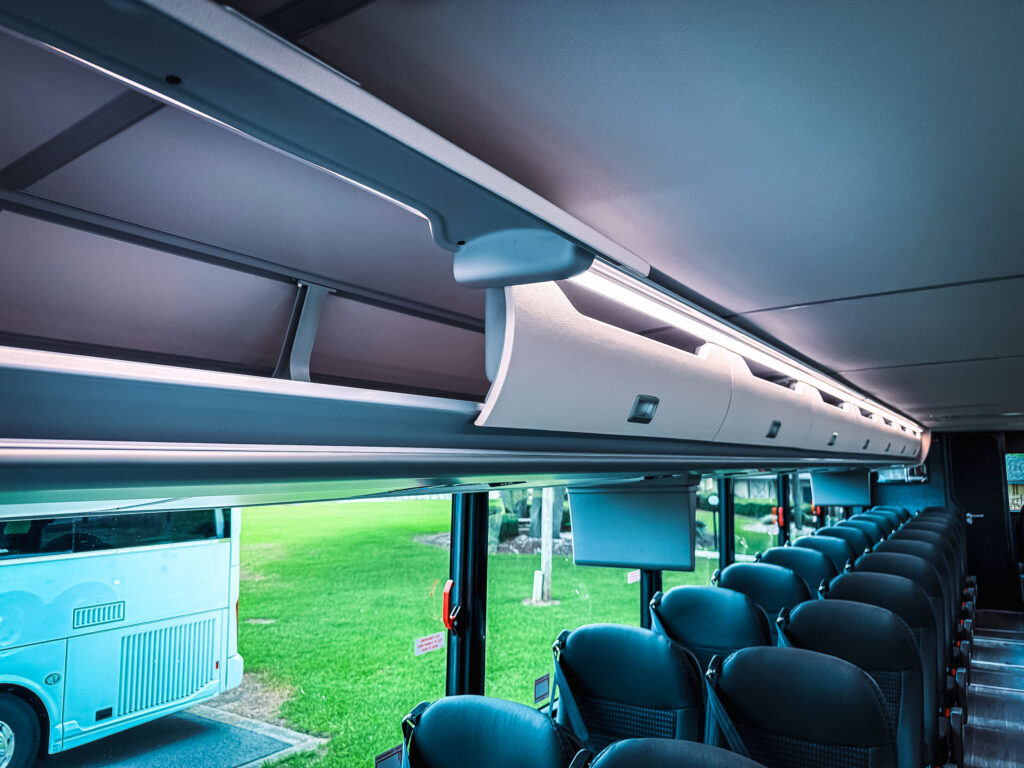
GO Express has built its business by adapting to change. From its early days as a shuttle service to its current operation, the company continues to evolve alongside its customers and the broader transportation landscape.
That same mindset applies to fleet planning.
“We’re always looking at where the business is going,” Martin said. “The fleet has to support that.”
Fleet decisions are no longer just about replacing vehicles. They are about making informed choices that support long-term performance, operational flexibility, and growth.
“What stands out with operators like GO Express is how intentional they are about evaluating equipment,” said Eric Reynolds, Account Manager at ABC Companies. “It is not about a single feature or specification. It is about how that coach fits into the bigger picture of their operation.”
For GO Express, this approach continues to guide how their fleet evolves and how it propels their business forward.
To learn more about Go Express Travel visit goexpresstravel.com.
To learn more about how ABC can power your fleet, visit abc-companies.com.

