How Public Transit Agencies Can Balance Rider Experience, Accessibility, and Long-Term Fleet Value
- July 30, 2026
- Blog
- Posted by Kiran Kaur
- Comments Off on How Public Transit Agencies Can Balance Rider Experience, Accessibility, and Long-Term Fleet Value
Transit fleet planning requires agencies to balance rider experience, accessibility, operational performance, and long-term value rather than treating them as competing priorities. Every fleet investment must support service demands, maintenance resources, budget constraints, and community expectations while delivering reliable performance throughout the vehicle’s lifecycle.
The strongest fleet decisions evaluate more than the initial purchase price. Public transit agencies should consider how well each vehicle serves riders, supports accessibility and maintenance, fits operating conditions, and performs over its expected service life. This article explores a balanced framework for evaluating fleet investments that deliver lasting value beyond compliance alone.
Why Public Transit Fleet Planning Requires a Balanced Approach

The success of public transit fleet planning is measured over years of service, not at the time of purchase. While acquisition cost is an important consideration, it represents only one part of a vehicle’s overall value. How well a vehicle supports daily operations, rider satisfaction, maintenance efficiency, and long-term reliability often has a greater impact on the return an agency receives from its investment.
Fleet planning also extends well beyond vehicle selection. Agencies must balance procurement timelines, funding requirements, board and stakeholder approvals, state-of-good-repair goals, and long-term capital planning while ensuring new vehicles align with current and future service needs. Vehicle decisions can also affect how agencies meet performance goals, utilize available government purchasing contracts, and manage public resources responsibly. Decisions made today may influence fleet performance, maintenance operations, and replacement strategies for well over a decade.
The right fleet supports consistent service, improves the rider experience, helps maintenance teams keep vehicles in operation, and provides the flexibility to adapt as routes, ridership patterns, and service models evolve. Planning should also account for maintenance team capacity, spare vehicle requirements, parts availability, and the resources needed to support vehicles throughout the vehicle lifecycle.
Ultimately, successful transit fleet planning is about more than purchasing vehicles. It’s about building a sustainable fleet strategy that supports operational reliability, lifecycle performance, effective asset management, and responsible stewardship of public funding for years to come.
Explore ABC’s Product Offering Guide as you compare vehicle configurations, specifications, and purchasing considerations.
Start With the Riders and Services the Vehicle Must Support

Every successful transit vehicle procurement process starts with understanding how a vehicle will be used. The right vehicle for one route or service may not be the best fit for another. Evaluating operational needs first helps agencies select vehicles that support riders while improving long-term performance and reliability.
Match the Vehicle to the Service Model
Vehicle specifications should reflect the demands of the service they will support. Agencies should consider whether the vehicle will operate in fixed-route, circulator, paratransit, demand-response, or community transportation service.
Other considerations include route length, passenger volume, roadway and climate conditions, maneuverability, and the need for space to accommodate mobility devices, strollers, luggage, or other onboard storage. Aligning the vehicle with these operational requirements helps support more efficient, reliable service.
Identify the Features That Shape Rider Experience
Vehicle design has a direct impact on the rider experience. Features like easy boarding, comfortable seating, effective HVAC systems, smooth ride quality, clear lighting, and audio and visual passenger information can improve comfort and accessibility while supporting more efficient operations.
Agencies should also consider how interior noise, vibration, visibility, passenger flow, and boarding time may affect rider comfort and route performance. Rather than treating every amenity as essential, agencies should prioritize the features that best serve their riders and routes. A vehicle designed around real operating conditions will provide greater long-term value than one selected from a generic checklist.
Build Accessibility Into Vehicle Selection From the Beginning
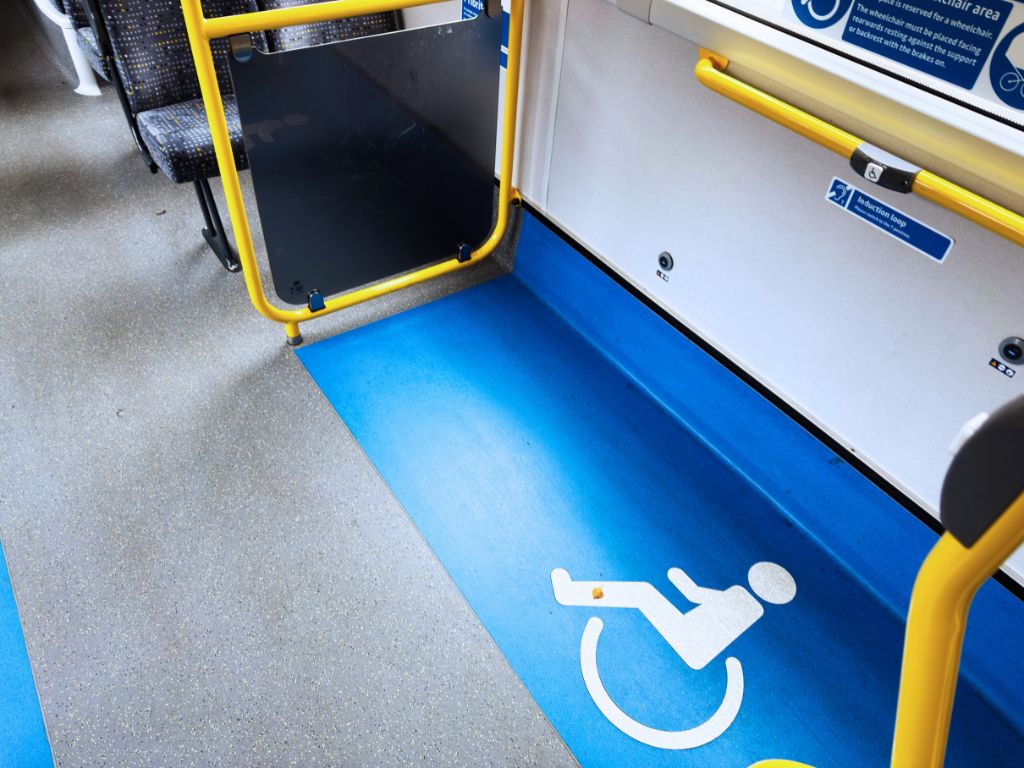
Accessibility should be a core part of public transit fleet planning, not a final compliance check. Considering accessibility requirements early in the specification process helps agencies select vehicles that better serve their communities while supporting smoother operations, more consistent service, and a more inclusive rider experience.
Accessibility influences far more than regulatory compliance. Vehicle design can affect boarding flow, passenger movement throughout the vehicle, dwell time at stops, driver interaction with passengers, and rider confidence when using the system. Interior layout, doorway placement, aisle width, seating configuration, and mobility device accommodations all contribute to how efficiently passengers board, travel, and exit the vehicle.
Key considerations include low-floor entry, ramp design, doorway width, wheelchair and mobility device securement, priority seating, aisle space, and audio and visual passenger information systems. Together, these features can make boarding, movement, and the overall ride experience more accessible, comfortable, and efficient for a wider range of passengers while helping agencies maintain more consistent service across their routes.
Developing specifications should also be a collaborative process. Input from accessibility committees, riders, drivers, maintenance personnel, and operations teams can help identify practical needs, evaluate how vehicles will perform in day-to-day service, and address potential challenges before procurement decisions are finalized.
For a closer look at low-floor designs, accessibility features, and ADA-compliant transit vehicles, read ADA Compliant Vehicles and Low-Floor Transit: What Fleet Operators Need to Know.
Measure Long-Term Fleet Value Beyond the Purchase Price
The purchase price is only one part of a vehicle’s overall lifecycle cost. A more complete evaluation considers how the vehicle will perform, what it will cost to operate, and how well it will support service over its entire lifecycle.
Calculate Total Cost of Ownership
A transit vehicle total cost of ownership analysis should include more than acquisition costs. Agencies should account for ongoing expenses such as fuel and electricity, scheduled maintenance, corrective repairs, replacement parts, warranty coverage, staff training, facility and infrastructure needs, and the operational impact of downtime and spare-vehicle requirements. Evaluating these costs together provides a clearer picture of the investment over time.
Consider Useful Life and Adaptability
Transit needs evolve, and fleet investments should be able to evolve with them. When evaluating vehicles, agencies should consider whether the design can continue to support evolving routes, ridership levels, accessibility needs, and future technology requirements throughout the vehicle’s service life.
Features such as flexible seating configurations, standardized components, upfit options, and alignment with planned propulsion requirements, telematics, fleet technology, and future passenger-information needs can help extend a vehicle’s usefulness. Considering these factors alongside transit fleet replacement planning and broader transit asset management goals helps agencies maximize value while maintaining a State of Good Repair.
Evaluate Maintainability and Support Before Procurement

A vehicle’s value depends not only on how it performs in service, but also on how efficiently it can be maintained. Even the most advanced features provide limited benefit if parts are difficult to source, repairs take too long, or technicians lack the resources needed to keep vehicles on the road.
Before making a procurement decision, agencies should evaluate factors such as parts availability, qualified service support, warranty coordination, technician and driver training, diagnostic resources, component standardization, and preventive maintenance requirements. Together, these factors can affect uptime, operating costs, and overall service reliability.
Reviewing current maintenance practices can also help identify where additional support may be needed before new vehicles are added to the fleet. ABC’s 2026 Summer Fleet Readiness Checklist provides a practical framework for reviewing maintenance priorities, preventive service needs, and vehicle readiness before peak seasonal demand.
Throughout the vehicle lifecycle, support resources can be just as important as the vehicle itself. ABC’s FleetAssist team provides technical assistance, field support, warranty coordination, technician training, manuals, and product resources to help agencies keep their fleets operating reliably long after delivery.
Use a Weighted Scorecard to Compare Transit Vehicle Options
Comparing vehicles across multiple priorities can make procurement decisions more objective, transparent, and defensible throughout the evaluation process. Rather than focusing primarily on acquisition cost, many public transit agencies benefit from a structured, two-step evaluation process that first confirms minimum requirements and then compares qualified vehicles against long-term operational priorities.
Establish Pass/Fail Requirements
Before comparing vehicle features, agencies should identify the requirements every vehicle must satisfy to remain under consideration. These baseline criteria help ensure that procurement decisions align with agency policies, funding requirements, and operational needs before additional evaluation begins.
Common pass/fail requirements may include ADA and accessibility compliance, vehicle size and capacity, route compatibility, emissions requirements, maintenance capabilities, state or federal funding eligibility, and procurement specifications. Depending on the agency, additional requirements may include compatibility with existing maintenance equipment, facility limitations, or available government purchasing contracts.
Compare Qualified Vehicles Using a Weighted Scorecard
Once qualified vehicles have been identified, agencies can evaluate each option using a weighted scoring matrix that reflects the factors most important to long-term fleet performance.
| Evaluation Area | Suggested Weight | Example Evaluation Questions |
| Rider experience | 15% | Does the vehicle support passenger comfort, visibility, boarding efficiency, and an overall rider experience? |
| Accessibility and inclusive design | 20% | How effectively does the vehicle support passengers with varying mobility needs while promoting efficient boarding and passenger movement? |
| Route and operational fit | 20% | Does the configuration align with passenger loads, route characteristics, stop frequency, and service requirements? |
| Total cost of ownership | 20% | What are the projected lifecycle costs for maintenance, parts, repairs, fuel or energy, and overall operation? |
| Maintainability and uptime | 15% | Can maintenance teams efficiently support the vehicle with available tools, training, diagnostic resources, and parts? |
| Supplier and lifecycle support | 10% | What warranty support, technical assistance, training, and long-term service resources are available after delivery? |
Each category can then be scored using a consistent evaluation scale, such as 1 to 5, where 1 indicates the vehicle does not adequately meet agency requirements and 5 indicates it strongly supports the agency’s operational goals with few or no compromises. Using the same scoring methodology for every qualified vehicle creates a more consistent, transparent evaluation process and helps document the reasoning behind procurement decisions.
Adjust the Weighting Based on Your Service Model
The weighting assigned to each category should reflect the agency’s operating environment rather than remain fixed across all procurements. Different service models place different demands on vehicles, making some evaluation criteria more important than others.
For example, a paratransit fleet may place greater emphasis on accessibility, boarding efficiency, and passenger movement. A fixed-route agency may prioritize lifecycle costs, reliability, and maintenance efficiency across a larger fleet. Circulator services often benefit from vehicles designed to enable quick boarding and shorter dwell times in dense urban environments, while microtransit operations may place greater emphasis on vehicle flexibility, maneuverability, and adaptability as service demands evolve.
Document the Decision-Making Process
A structured scorecard also makes it easier to explain procurement decisions during board presentations, stakeholder reviews, and funding audits. By documenting both minimum qualification requirements and weighted evaluation criteria, agencies can demonstrate that vehicle selections were based on operational priorities, long-term asset management goals, and responsible stewardship of public funding rather than purchase price alone.
Frequently Asked Questions About Public Transit Fleet Planning
What should a public transit agency consider when selecting fleet vehicles?
Public transit agencies should evaluate service fit, rider needs, accessibility, route compatibility, total cost of ownership, maintainability, supplier support, and asset management goals before selecting fleet vehicles. Considering these factors together helps ensure vehicles align with operational needs throughout their service life rather than simply meeting initial procurement requirements.
Explore ABC’s new and pre-owned inventory.
Why should agencies use a weighted scorecard during vehicle evaluation?
A weighted scorecard provides a structured, objective way to compare qualified vehicles across the criteria that matter most to the agency. After confirming each vehicle meets minimum pass/fail requirements, agencies can assign weighted values to factors such as rider experience, accessibility, operational fit, total cost of ownership, maintainability, and supplier support. This approach helps create a more transparent procurement process and makes it easier to document how vehicle selections support long-term operational priorities.
How does vehicle accessibility affect rider experience?
Accessibility influences far more than regulatory compliance. Features such as low-floor entry, ramps, wider doorways, accessible seating, clear passenger information, and thoughtfully designed interior layouts can improve boarding flow, reduce dwell times, support passenger independence, and make movement throughout the vehicle more efficient. These considerations help create a more accessible and consistent experience for riders across a variety of transit services.
What costs should be included in a transit vehicle total cost of ownership calculation?
A complete total cost of ownership analysis should include acquisition or financing costs, fuel or electricity, preventive maintenance, corrective repairs, replacement parts, warranty coverage, technician training, facility or charging infrastructure requirements, downtime, and the vehicle’s expected service life. Looking beyond the purchase price provides a more accurate picture of the vehicle’s long-term financial impact.
Why should maintenance support be evaluated before purchasing a vehicle?
Maintenance support plays a significant role in fleet reliability and uptime. Agencies should evaluate parts availability, technical support, warranty coordination, technician training, diagnostic resources, and overall service capabilities before making a purchasing decision. Understanding these resources in advance can help reduce downtime, improve maintenance planning, and support consistent service throughout the vehicle lifecycle.
Balance Today’s Needs With Tomorrow’s Performance

Successful transit fleet planning goes beyond selecting vehicles that meet today’s operational requirements. The strongest fleet investments balance rider experience, accessibility, maintenance, and long-term lifecycle value to support reliable service for years to come.
A structured, cross-functional evaluation process can help agencies align vehicle decisions with service goals, budget priorities, maintenance capabilities, and long-term asset plans.
Whether your agency is evaluating new vehicle configurations, planning a fleet replacement, or preparing for an upcoming procurement, ABC can help you assess accessibility, operational fit, financing, maintenance support, and long-term fleet value.

