Transit Bus Maintenance: What Makes a Bus Easier to Service Over Its Lifecycle
- September 10, 2026
- Blog
- Posted by Kiran Kaur
- Comments Off on Transit Bus Maintenance: What Makes a Bus Easier to Service Over Its Lifecycle
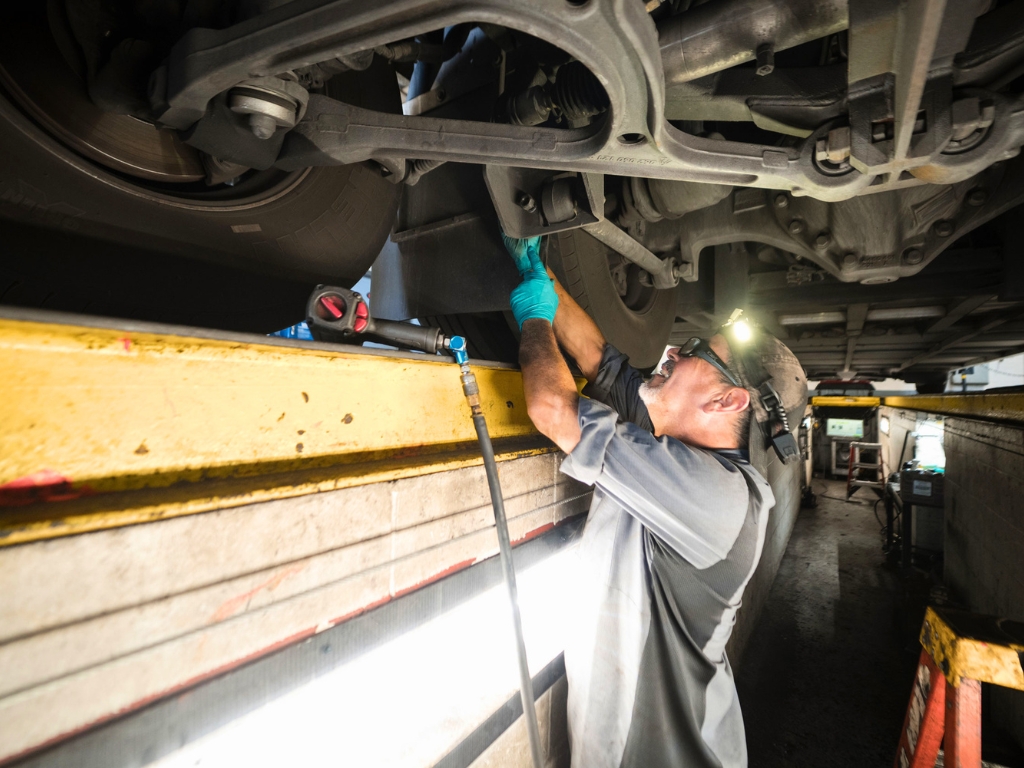
Transit bus maintenance affects far more than repair schedules. When a bus is difficult to inspect, diagnose, or repair, technicians spend more time completing routine work, vehicles remain out of service longer, and agencies face greater pressure on schedules, spare ratios, and overall fleet availability.
Many of the factors that influence maintenance efficiency are determined before a vehicle enters service. Component accessibility, diagnostic systems, parts availability, service documentation, and long-term technical support all play a role in how efficiently maintenance teams can keep vehicles on the road.
Evaluating how a bus will be maintained throughout its lifecycle can help procurement and maintenance teams keep vehicles available for service, support preventive maintenance, and make more informed long-term fleet decisions.
What Makes a Transit Bus Easier to Maintain?
Reliability refers to how often a component or system experiences a failure. Serviceability refers to how quickly that failure can be inspected, diagnosed, and corrected. A highly reliable vehicle can still be expensive to maintain if routine service requires excessive labor or repairs involve difficult component access, limited documentation, or long parts lead times. Likewise, a well-designed vehicle can help shorten repair windows and return vehicles to service more quickly by making maintenance tasks faster and more predictable when issues do occur.
A transit bus is easier to maintain when technicians can complete inspections, diagnose problems, and perform repairs efficiently using the tools, information, and resources already available to the agency. While reliability and serviceability are closely related, they are not the same.
When comparing vehicles, maintenance and procurement teams should evaluate factors such as:
- Accessible components for routine inspection and repair
- Clear, actionable diagnostic systems
- Standardized parts and vehicle systems where appropriate
- Complete and current service documentation
- Technician training and responsive technical support
- Compatibility with the agency’s existing fleet, tools, and facilities
- Durable, repairable materials and components designed for repeated commercial use
Both reliability and serviceability affect vehicle availability, lifecycle costs, and the total cost of ownership. Evaluating both provides a more complete picture of how a vehicle is likely to perform throughout its service life.
Accessible Components Reduce Routine Service Time
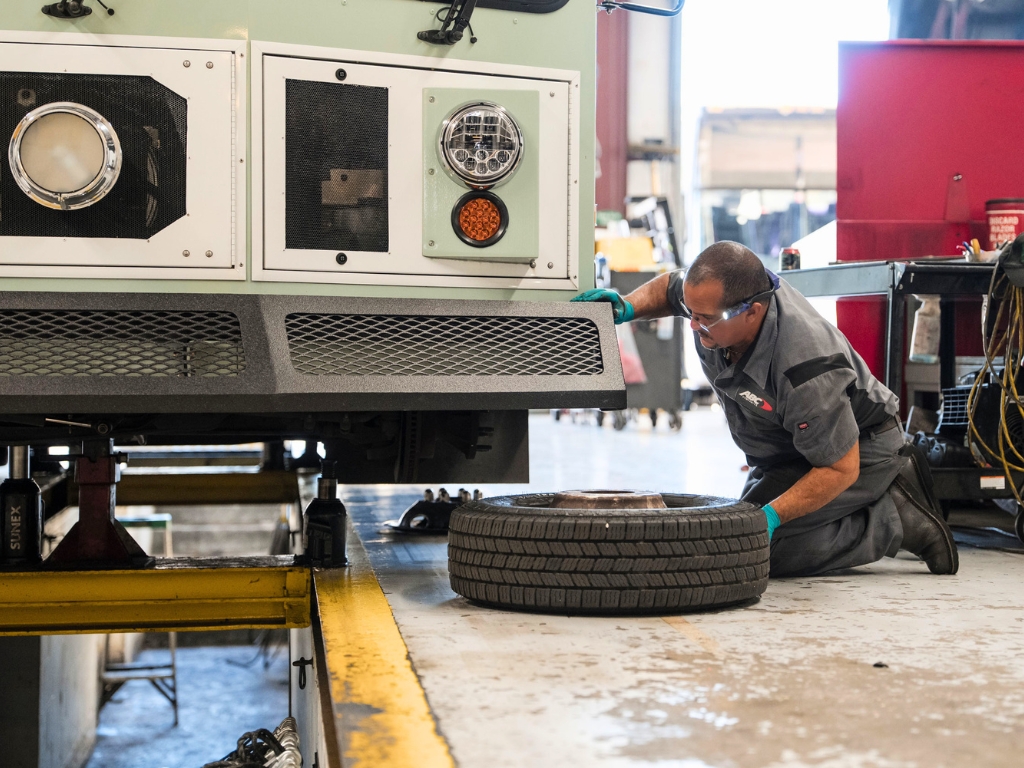
Many transit bus maintenance tasks are performed repeatedly throughout a vehicle’s service life. The time required to complete those tasks depends not only on technician skill, but also on how easily critical components can be accessed.
Routine service is more efficient when frequently inspected or replaced components are positioned for practical access. Well-designed service panels, adequate working space, and logical component placement help technicians complete inspections and repairs with fewer unnecessary steps. Filters, fluid fill points, belts, electrical connections, and inspection points should be easy to locate and reach using standard shop equipment.
Maintenance accessibility extends beyond whether a component is technically reachable. If technicians must remove unrelated parts to complete a routine repair, bus maintenance becomes more time-consuming and labor-intensive. Access panels, hinges, latches, and fasteners should also withstand repeated use throughout the vehicle’s service life.
Maintenance teams should be involved in vehicle demonstrations and procurement evaluations. Their firsthand experience can help identify serviceability challenges that may not be obvious during a standard product review.
Questions Maintenance Teams Should Ask
During vehicle evaluations, maintenance teams should look beyond whether components are accessible and consider how efficiently routine work can be completed in day-to-day operations. Questions like these can help identify potential service challenges before a vehicle enters the fleet:
- Can common inspections be completed without removing unrelated components?
- Are daily and preventive maintenance points easy to identify?
- Can technicians safely reach the component using standard shop equipment?
- Do frequently opened panels, access doors, and fasteners appear durable enough for repeated service?
- Are special tools required for routine maintenance tasks?
Answers to these questions can help agencies compare vehicles based on real maintenance workflows rather than specifications alone. Even small differences in accessibility can add up over years of service, affecting technician productivity, vehicle availability, and long-term maintenance costs.
Diagnostic Systems Should Help Technicians Find the Problem Faster
Modern transit buses combine mechanical, electrical, propulsion, emissions, accessibility, and onboard technology systems. When a problem occurs, technicians need diagnostic tools that help them quickly identify the root cause, rather than sorting through disconnected data from multiple systems.
Effective diagnostic systems provide clear fault codes, centralized access to vehicle information, system health data, troubleshooting procedures, and supporting resources such as wiring diagrams and schematics. When paired with accessible software and diagnostic tools, this information helps technicians identify issues accurately and make more informed repair decisions.
Not all diagnostic systems deliver the same value. Some generate large amounts of data but provide little guidance on what the information means or how to resolve the issue. The most effective systems support the technician by presenting actionable information that guides a logical troubleshooting process, rather than requiring additional investigation across multiple platforms.
During procurement, agencies should also evaluate how diagnostic software will be accessed, updated, and supported over the vehicle’s lifecycle. Understanding licensing requirements, training needs, compatibility with existing shop tools, and ongoing software support can help maintenance teams prepare for the vehicle’s long-term service needs.
Parts Availability and Component Standardization Matter

Efficient transit bus maintenance depends on more than accessible components and effective diagnostics. Once a problem has been identified, the required parts need to be available when they’re needed. Even straightforward repairs can result in extended downtime if critical components have long lead times or limited distribution.
During procurement, agencies should evaluate the availability of routine service parts, expected lead times for major components, long-term parts support, and the strength of the supplier’s distribution network. Vehicles that use components from established manufacturers may also simplify sourcing and improve access to replacement parts throughout the vehicle’s lifecycle.
Component standardization can further improve maintenance efficiency by reducing operational complexity across the fleet. When vehicles share common parts, systems, or suppliers where appropriate, agencies may benefit from:
- Simpler parts inventory management
- More consistent technician training
- Fewer diagnostic platforms and specialized tools
- Standardized preventive maintenance procedures
- More efficient spare-parts planning
Standardization should not outweigh operational requirements or vehicle performance, but it should be considered alongside other procurement criteria. A vehicle that fits well within an agency’s existing maintenance operation may help support fleet availability, simplify parts management, and improve long-term maintenance efficiency.
Documentation and Training Support the Maintenance Team
A vehicle’s serviceability depends not only on its design, but also on the information and support available throughout its lifecycle. Even well-designed vehicles become more difficult to maintain when technicians lack accurate documentation or access to ongoing training.
Before a vehicle enters service, agencies should confirm that complete maintenance resources are available, including service manuals, preventive maintenance schedules, parts catalogs, wiring diagrams, troubleshooting procedures, and technical bulletins. Those resources should also remain current as software, components, and vehicle systems evolve.
Initial and ongoing technician training helps maintenance teams work more efficiently and stay current on new systems and updates. Responsive technical support can also help agencies resolve complex issues more quickly and reduce downtime.
The American Public Transportation Association (APTA) also publishes maintenance standards and guidance that reinforce the value of standardized documentation, repeatable maintenance practices, and ongoing training across transit bus maintenance programs.
At ABC Companies, that support extends beyond vehicle delivery. Through technician training, technical assistance, parts, and service support, ABC helps transit agencies build the resources needed to maintain their fleets throughout the vehicle lifecycle.
Fleet Compatibility Can Reduce Maintenance Complexity
A transit bus should be evaluated as part of the existing fleet, not as a standalone vehicle. Even a bus with strong individual specifications can create maintenance challenges if it requires different tools, training, diagnostic platforms, or facility modifications than the rest of the fleet.
During procurement, agencies should consider how a vehicle fits within their current maintenance operation, including propulsion systems, technician certifications, diagnostic equipment, shop tools, lifting capacity, facility clearances, existing parts inventory, fueling or charging infrastructure, and accessibility systems. The closer the fit, the easier it may be to integrate the vehicle into established transit fleet maintenance processes.
New technologies may justify additional investments in equipment, infrastructure, or training, but those requirements should be identified before a purchasing decision is made. Evaluating fleet compatibility early helps agencies better understand the operational impact of adding a new vehicle and plan for long-term maintenance success.
Durable and Repairable Materials Affect Long-Term Workload

Materials that perform well in daily transit service can help reduce maintenance demands over time. While no component is maintenance-free, durable, repairable designs may require fewer replacements and simplify repairs when damage does occur.
During vehicle evaluations, agencies should consider corrosion protection, flooring, seating, interior surfaces, exterior panels, electrical connectors, doors, ramps, accessibility equipment, and other frequently used components. Fasteners, hinges, and other high-use hardware should also be designed to withstand repeated service throughout the vehicle’s lifecycle.
Modular or replaceable components can further improve transit bus maintenance by allowing damaged sections to be repaired or replaced without removing larger assemblies. Considering long-term durability alongside maintenance accessibility can help reduce labor requirements, support transit bus repair, and improve vehicle availability over time.
Read more: How Go Express Travel Aligns Equipment with Its Operation
Serviceability Should Be Evaluated as Part of Total Cost of Ownership
The lowest purchase price does not always result in the lowest total cost of ownership. A vehicle that is easier to inspect, diagnose, and repair can help support lower maintenance demands and stronger availability over its service life.
Serviceability can affect technician labor, vehicle downtime, parts inventory, outside repairs, training, tooling, road calls, towing, spare-fleet requirements, and service disruptions. Evaluating these factors alongside acquisition costs provides a more complete picture of transit bus lifecycle costs.
Rather than comparing vehicles by features alone, agencies should consider realistic maintenance scenarios. A standardized procurement scorecard can help maintenance and procurement teams evaluate vehicles using consistent criteria.
Transit Asset Management (TAM) is intended to help agencies maintain vehicles in a state of good repair over time. The TAM website states, “The primary purpose of the FTA’s Transit Asset Management (TAM) program is to help achieve and maintain a State of Good Repair (SGR) for the nation’s public transportation assets. FTA recommends TAM practices to preserve and expand transit investments, helping to ensure that operations are safe and dependable.” Evaluating serviceability during procurement supports that goal while helping agencies make more informed long-term investment decisions.
What to Ask Before Selecting a Transit Bus

Before making a procurement decision, maintenance and procurement teams should evaluate how a vehicle will fit into day-to-day maintenance operations, not just how it performs on paper. Questions like these can help identify potential serviceability challenges before a bus enters the fleet:
- Which components require the most frequent service?
- How are those components accessed?
- Which routine tasks require special tools?
- What diagnostic equipment and software are required?
- Which parts are stocked domestically or regionally?
- What are typical parts lead times?
- What service documentation is provided?
- What technician training is included?
- How does the vehicle fit the agency’s existing shop capabilities?
- What technical support is available after delivery?
- How will software, documentation, and training be updated?
- Which maintenance responsibilities remain with the agency, manufacturer, dealer, or third-party provider?
Using a consistent set of evaluation questions helps agencies compare vehicles beyond specifications alone and better understand the long-term maintenance requirements of each option. Working with an experienced fleet partner like ABC can also help agencies evaluate these considerations with long-term service and support needs in mind.
Build Long-Term Maintenance Success Into Your Fleet
Transit bus maintenance is influenced by more than the vehicle itself. Component accessibility, diagnostic systems, parts availability, fleet compatibility, durable materials, and long-term support all play a role in how efficiently a bus can be inspected, repaired, and returned to service.
The most maintainable bus is not necessarily the one with the fewest features. It’s the one your organization can efficiently inspect, diagnose, repair, and support throughout its lifecycle. Maintenance and procurement teams should therefore evaluate vehicles together, considering long-term serviceability alongside operational and performance requirements.
ABC supports transit agencies beyond vehicle delivery with transit bus sales, parts, service, technical assistance, training, and lifecycle planning. Whether you’re expanding your fleet or evaluating replacement vehicles, our team can help you compare options with long-term maintenance and performance in mind. Contact ABC today to discuss transit bus sales and lifecycle support to find the right solution for your fleet.

